
The Truth About Organic Cotton: Why Your Wardrobe (and the Planet) Will Thank You
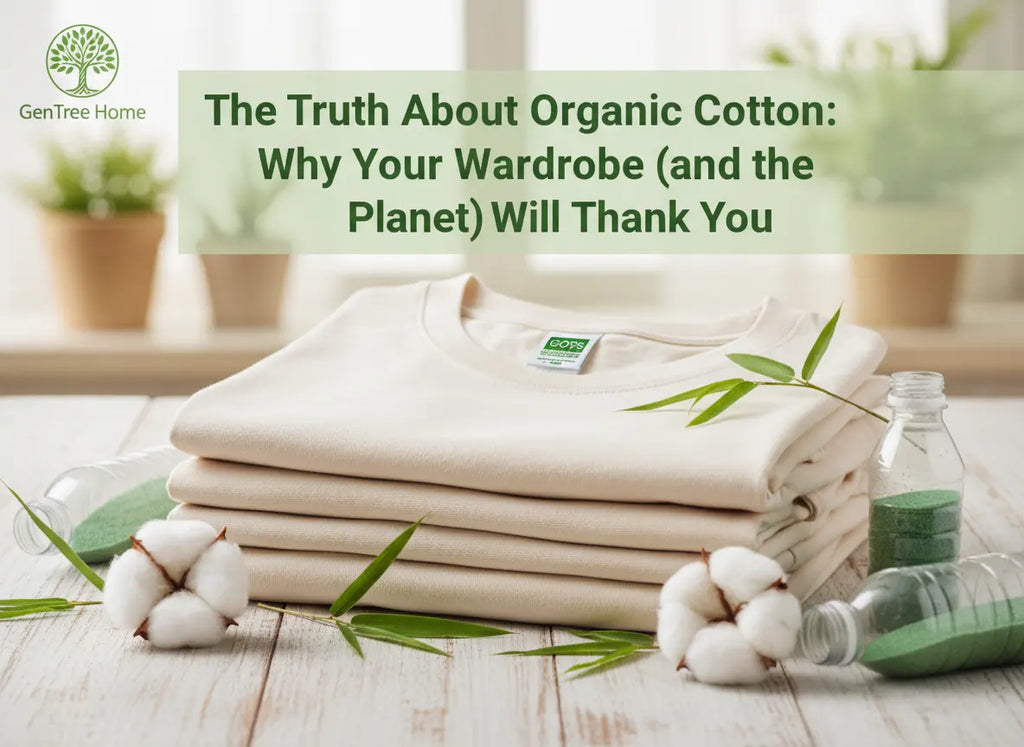
The Hidden Cost of Conventional Cotton
When you slip on a soft cotton t-shirt, you probably aren't thinking about pesticides, water consumption, or soil degradation. But the truth is, conventional cotton production is one of the most resource-intensive and chemically dependent agricultural practices on the planet. At GenTree Home, we believe you deserve to know what you're wearing—and why choosing organic cotton isn't just better for the environment, it's better for you.
Organic Cotton vs. Conventional Cotton: The Real Difference
Water Consumption
Conventional cotton is notoriously thirsty. It takes approximately 2,700 liters of water to produce enough cotton for a single t-shirt—that's what one person drinks over 2.5 years. Organic cotton farming, however, relies primarily on rainwater and efficient irrigation systems, reducing water consumption by up to 91% compared to conventional methods.
Chemical Use
Here's where the difference becomes stark:
- Conventional cotton accounts for only 2.4% of the world's cultivated land but uses 16% of the world's insecticides and 7% of all pesticides
- Organic cotton is grown without synthetic pesticides, herbicides, or fertilizers, relying instead on natural methods like crop rotation, composting, and biological pest control
These chemicals don't just disappear. They seep into groundwater, contaminate soil, harm farmworkers, and remain as residues in the finished fabric—against your skin.
Soil Health
Conventional cotton farming depletes soil nutrients, requiring increasingly more chemical fertilizers each season. Organic cotton farming builds soil health through:
- Natural composting and mulching
- Crop rotation that replenishes nutrients
- Biodiversity that creates resilient ecosystems
- Long-term sustainability that protects farmland for future generations
Human Health Impact
The World Health Organization estimates that 3 million people suffer from pesticide poisoning annually, with cotton farmworkers among the most affected. Organic cotton protects:
- Farmers and their families from toxic chemical exposure
- Factory workers who process the cotton
- You, the wearer, from chemical residues against your skin
Understanding Certifications: What They Really Mean
Not all "organic" labels are created equal. Here's what to look for:
GOTS (Global Organic Textile Standard)
The gold standard for organic textiles. GOTS certification ensures:
- At least 70% organic fibers (GOTS "made with organic" label)
- At least 95% organic fibers (GOTS "organic" label)
- No toxic dyes or chemicals in processing
- Fair labor practices throughout the supply chain
- Environmental responsibility at every production stage
OEKO-TEX Standard 100
Tests finished textiles for harmful substances, ensuring the final product is safe for human health.
Fair Trade Certification
Guarantees fair wages and safe working conditions for cotton farmers and textile workers.
At GenTree Home, we prioritize suppliers with these certifications because they align with our commitment to transparency, sustainability, and ethical production.
Beyond 100% Organic: The Power of Blended Materials
While 100% organic cotton is excellent, we're excited about innovative fabric blends that take sustainability even further:
80% Organic Cotton + 20% Bamboo
This blend combines the best of both worlds:
-
Bamboo grows incredibly fast without pesticides or fertilizers
- Requires no irrigation—it thrives on rainfall alone
- Naturally antibacterial and moisture-wicking
- Creates a softer, more breathable fabric
- Adds durability and shape retention
80% Organic Cotton + 20% Recycled Polyester
This combination offers:
-
Recycled polyester diverts plastic bottles from landfills (approximately 5 bottles per shirt)
- Reduces petroleum consumption by up to 59%
- Adds wrinkle resistance and longevity
- Maintains the soft feel of cotton with enhanced durability
- Lower overall environmental footprint
These blends aren't just eco-conscious—they're more functional, longer-lasting, and often more comfortable than 100% conventional cotton.
The GenTree Home Commitment
Our organic apparel collection reflects our core values:
-
Timeless Traditions: Quality pieces that last for years, not seasons
-
Respecting Heritage: Supporting traditional farming methods and fair labor practices
-
Enriching Lives: Protecting the health of farmers, workers, and our customers
-
Embracing Futures: Investing in sustainable practices that preserve our planet for future generations
When you choose organic cotton from GenTree Home, you're not just buying a t-shirt—you're casting a vote for:
- Cleaner water systems
- Healthier soil
- Safer working conditions
- A reduced carbon footprint
- A more sustainable fashion industry
Making the Switch: What It Means for You
Comfort and Quality
Organic cotton is often softer because it hasn't been treated with harsh chemicals. The fibers remain longer and stronger, resulting in:
- Better breathability
- Enhanced durability
- Softer hand feel that improves with each wash
- Hypoallergenic properties ideal for sensitive skin
Longevity
Because organic cotton fibers are stronger and haven't been weakened by chemical processing, your garments last longer—meaning fewer replacements and less waste.
Peace of Mind
Every time you wear organic cotton, you know you're supporting:
- Farmers who can work safely without toxic exposure
- Communities with cleaner water and healthier ecosystems
- A supply chain built on fairness and transparency
The Bigger Picture
The fashion industry is the second-largest polluter in the world, but it doesn't have to be. Every purchase is a choice—a choice between supporting destructive practices or investing in regenerative ones.
At GenTree Home, we believe sustainable living starts with understanding what we bring into our homes and onto our bodies. Organic cotton and innovative blended materials represent more than just fabric—they represent a commitment to doing better.
Your Next Step
Ready to make the switch? Explore our collection of organic cotton apparel and sustainable blends at GenTreeHome.com. Each piece is thoughtfully sourced, ethically produced, and designed to become a lasting part of your wardrobe.
Because when you choose organic, your wardrobe—and the planet—really will thank you.
Questions? We'd love to hear from you. Email us at connect@gentreeglobal.com or call 844-314-1034.
At GenTree Home, we're building legacies—one sustainable choice at a time.




%20Will%20Thank%20You)